
atmos:instruments:dc_wiring
DC connector guide
Most equipment that requires Direct Current and needs to be plugged in quickly will need an XT60E connector. The XT60E is made up of a male and female connector. The male end is signified as follows: XT60E-M and the female connector is signified by: XT60E-F. The female connector is also larger than the male connector. To connect an instrument to a power source the following should be performed:
- Measure out and cut the length of cable you need from the combined back and red cable reel (18 AWG) this will be the power source cable
- strip both ends of the cable and the ends of the cable that connects to the instrument you intend to connect.
- Cut out 4 pieces of heat shrink and put the pieces through the ends of the cable before soldering the connections.
- Each connector has its polarity labeled on the side or top of the respective connector. The negative connection (black wire) is always on the rounded side of the plug and the positive connection (red wire) is always on the straight side of the plug
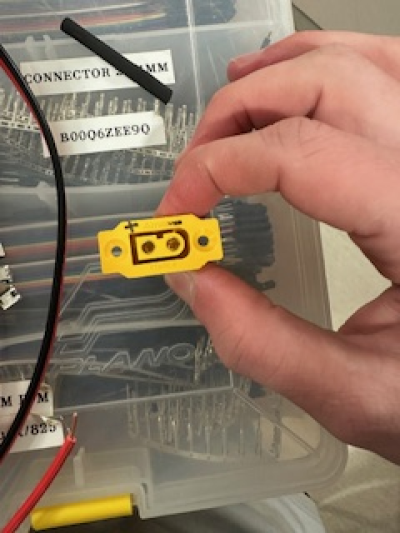
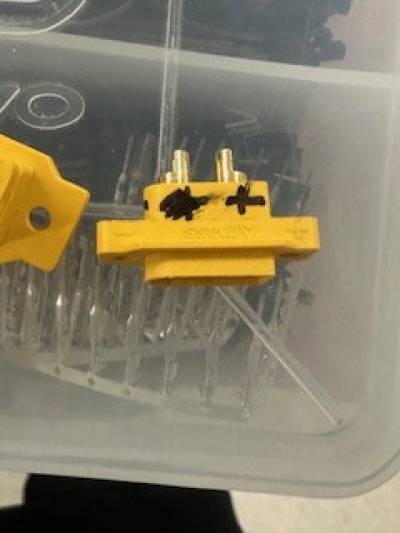
- start by soldering the powered (female) connector to the power source cable. Make sure you use electrically conductive solder. Like a standard outlet the female connector will always be powered


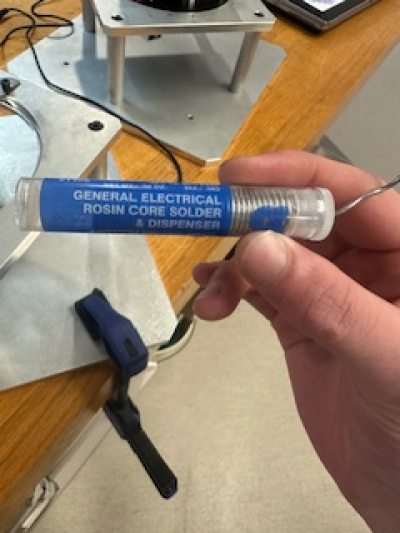
- Separate the cables enough so the heat shrink is far enough away from the soldering iron to not melt
- Keep the solder heat setting at or below 38 so as to not risk melting the plastic casing (This is more of an issue on the smaller male connector but its good practice to follow on both connectors)
- After soldering the female plug to the powered cable, you can solder the male plug to the cable connected to the instrument
- Plug the connectors together and use a multimeter to test for continuity across the plug. The multimeter should not show “Lo” when testing
- Once both connectors have been soldered and you tested for continuity, place the heat shrink over the exposed connection of each plug and use the heat gun to seal the soldered connections
- try to cover the entire connection so as to not have any exposed metal
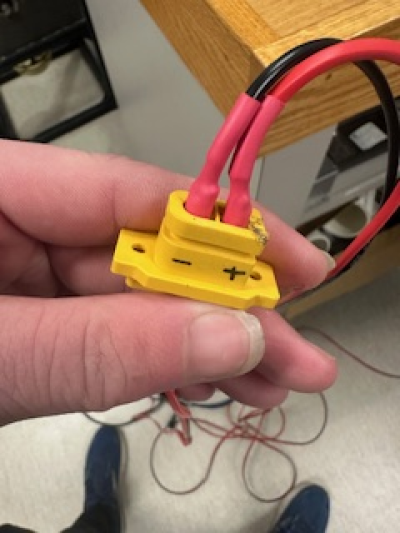
- example of a good seal
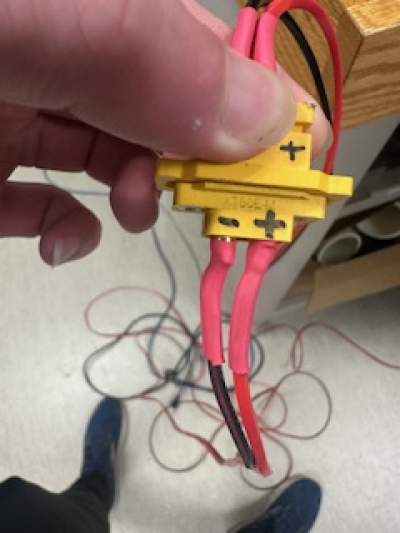
- not a great seal but it will work


atmos/instruments/dc_wiring.txt · Last modified: 2025/12/11 22:47 by johansen